From the blog
How to scale a recipe up or down, and what not to multiply
How to scale a recipe: find the conversion factor, multiply what scales cleanly, then handle the salt, eggs, pans, and bake times that do not.
The recipe serves four, there are seven of you, and the arithmetic has to happen before the oven’s hot. To scale a recipe, divide the servings you want by the servings it makes, multiply each ingredient by that number, then fix the handful of things that don’t grow in a straight line. A calculator handles the multiplying. It gets the fixing wrong, and the fixing is most of this post.
How to scale a recipe: start with the conversion factor
Conversion factor = servings you want ÷ servings the recipe makes.
Four servings to eight is a factor of 2. Four to two is 0.5. Four to six is 1.5. If the recipe gives a yield instead of servings, such as one 9-inch loaf or 24 cookies, divide the yields the same way.
Multiply every ingredient by that one number. Flour, sugar, milk, butter, stock, vegetables, meat, and pasta scale in a straight line, and for most savoury cooking that’s the whole job.
A worked example, by hand
Here are some Saturday pancakes that serve four, scaled to six for a crowded brunch. Six divided by four is 1.5.
| Ingredient | Serves 4 | × 1.5 | What to actually measure |
|---|---|---|---|
| Flour | 1½ cups | 2¼ cups | 2¼ cups |
| Sugar | 2 tbsp | 3 tbsp | 3 tbsp |
| Baking powder | 2 tsp | 3 tsp | 1 tbsp (3 tsp is a tablespoon) |
| Salt | ½ tsp | ¾ tsp | a scant ¾ tsp |
| Milk | 1¼ cups | 1⅞ cups | just under 2 cups |
| Egg | 1 | 1½ | 1 egg plus half of a beaten egg |
| Butter | 3 tbsp | 4½ tbsp | 4½ tbsp |
The middle column is what a calculator gives you. The right column is what you put in the bowl, and the gap between them is where the next section lives.
What doesn’t scale in a straight line
Salt and strong spices. A doubled pot does not need twice the salt to taste the same. When you double a recipe, the usual rule of thumb is to start salt, chili, cumin, and cloves at about 75% of the multiplied amount, roughly 1½ times the original instead of 2, then taste and add. An under-salted pot takes a pinch to fix. An over-salted one needs a third batch.
Leavening. Baking powder and baking soda scale fine in a quick batter like pancakes. In cakes and breads the trouble is usually the pan, not the powder, because a deeper pan of batter rises and sets differently. When doubling a cake, bake two pans of the original size instead of one bigger one.
Eggs. Eggs only come whole, which is fine going up and awkward when you scale down a recipe. Below one egg, beat it, then measure. A large egg is about 3 tablespoons (roughly 50 g) out of the shell, so half an egg is about 1½ tablespoons. Keep the rest for an egg wash or tomorrow’s scramble.
Pan size and surface area. Halving a 9×13 recipe? A 9×13 pan is 117 square inches and an 8×8 is 64, a little more than half. Half the batter fits an 8×8 at nearly the same depth, so the bake time stays close to the original. Check it early. Going the other way, a doubled stew in the same pot sits twice as deep over the same surface, so it takes longer to reduce and thicken.
Cooking time. Time depends on thickness and heat, not quantity. A doubled batch of pancakes still cooks two minutes a side; you just stand there for more rounds. A doubled roast or a deeper casserole takes longer, and a halved one less. Go by doneness, like a clean skewer or a centre that stops wobbling, and treat the written time as the moment to first check.
Is there a recipe scaler that does the maths?
Someone asks this on Reddit every so often, and the usual answer is a calculator website. You type in every ingredient by hand and it returns a list of decimals. That works for one recipe and gets old for the one you cook every week.
Pantry Pal puts a servings stepper on the recipe itself. Here’s those pancakes in my cookbook, at the four servings the recipe was written for.
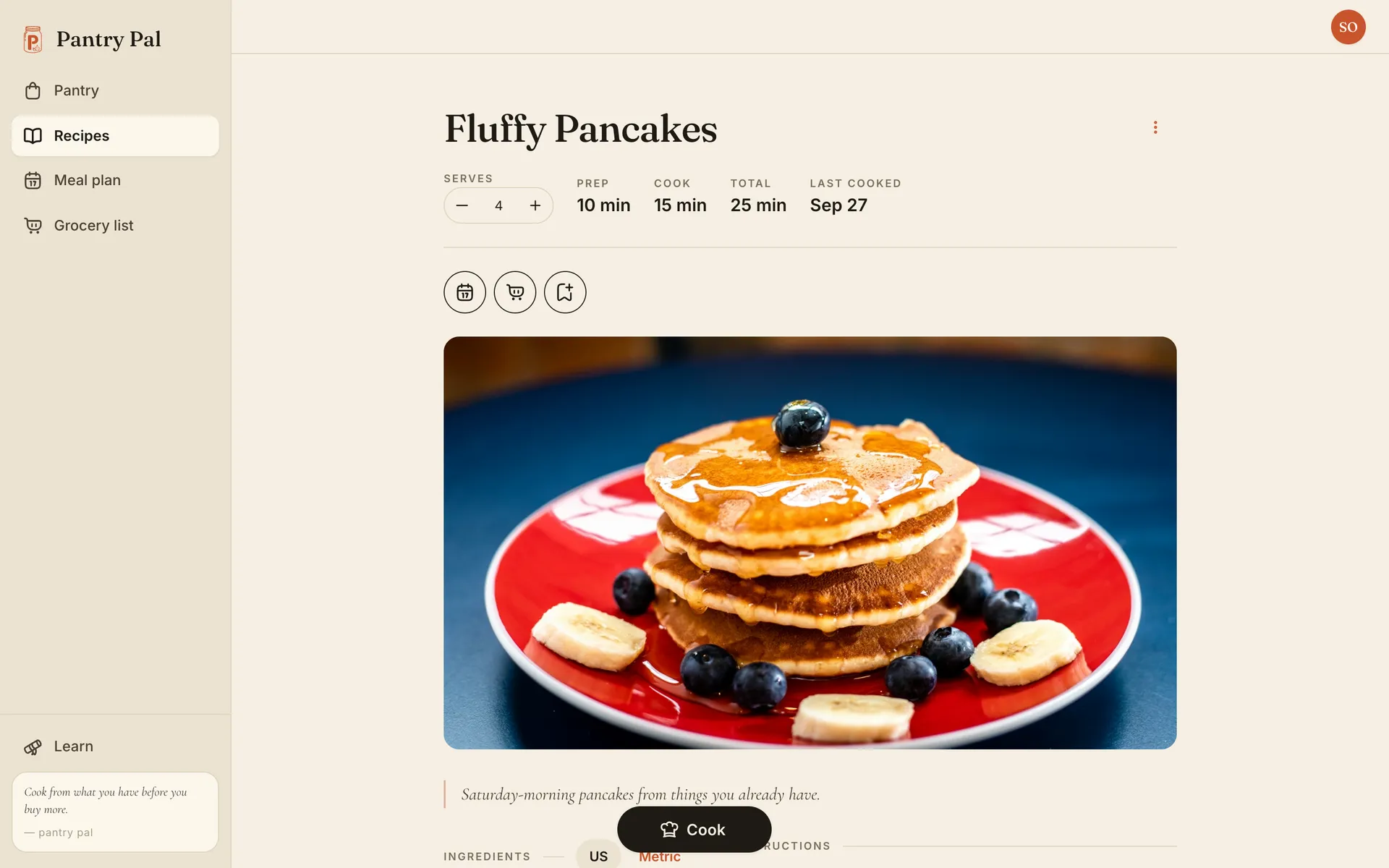
Tap minus twice and the ingredient list rescales to two servings: ¾ cup flour, ⅝ cup milk, 1½ tbsp butter. Quantities show as kitchen fractions like ⅝, not 0.625.
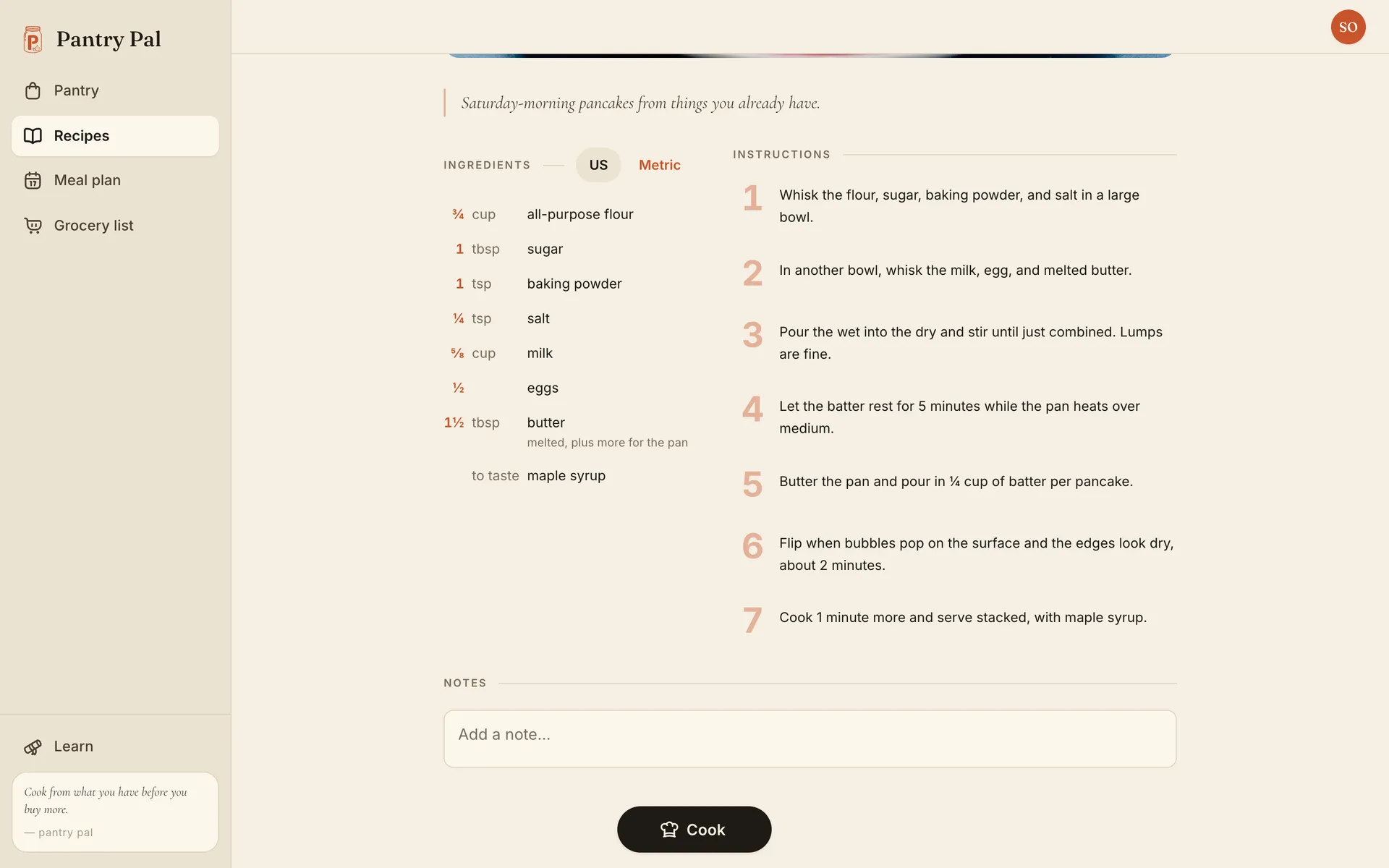
It shows ½ egg because that’s the arithmetic. It doesn’t round to a whole egg, so you decide between one whole egg and the beat-and-measure trick from above. The instructions on the right didn’t change either. Step 5 still says ¼ cup of batter per pancake, which is right at any batch size.
Cook mode keeps the scaled numbers in front of you
Scaling on the recipe page is half of it. The other half is keeping the new numbers in view once your hands are covered in batter. Cook mode opens on a mise en place checklist with its own servings stepper, so you can scale right there before you start.
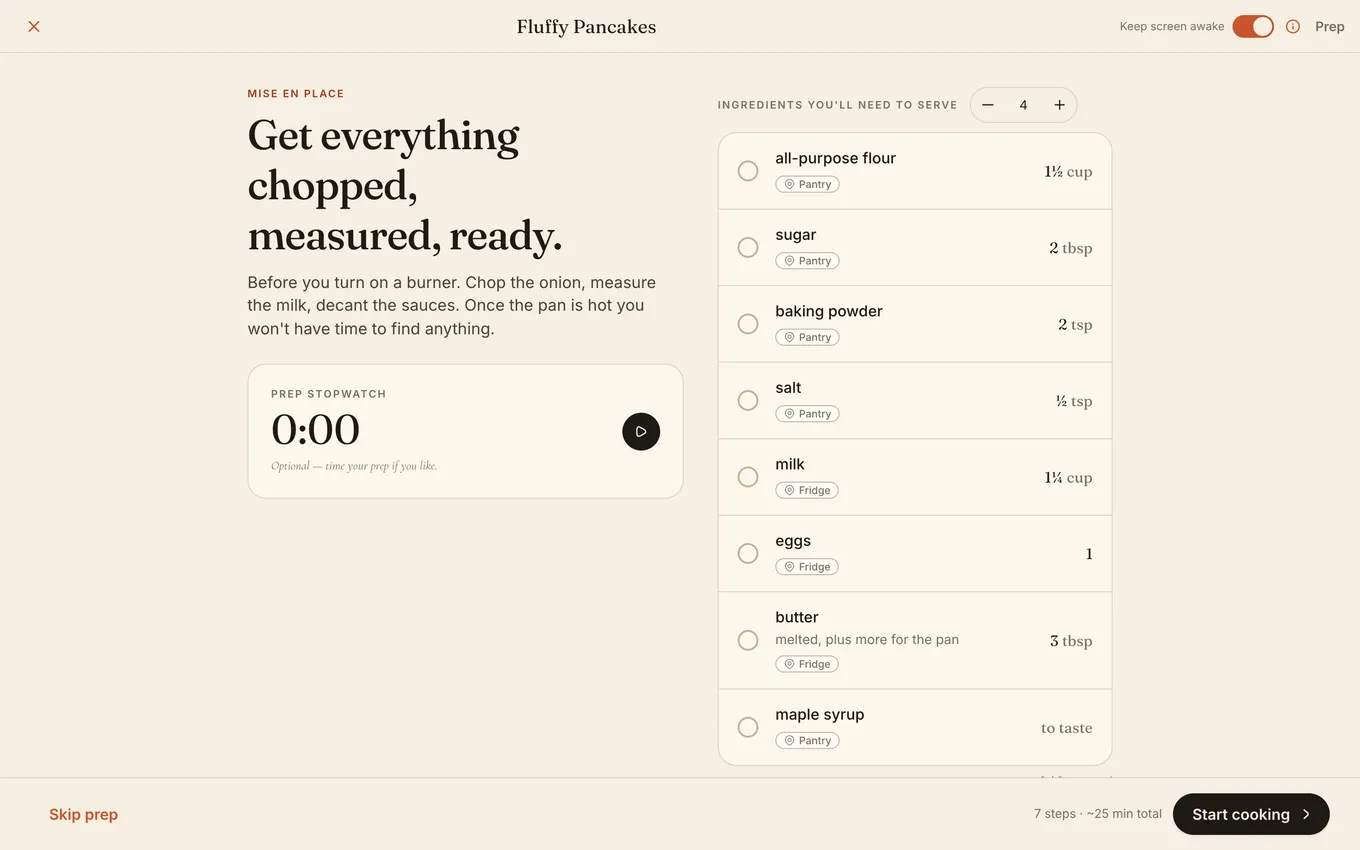
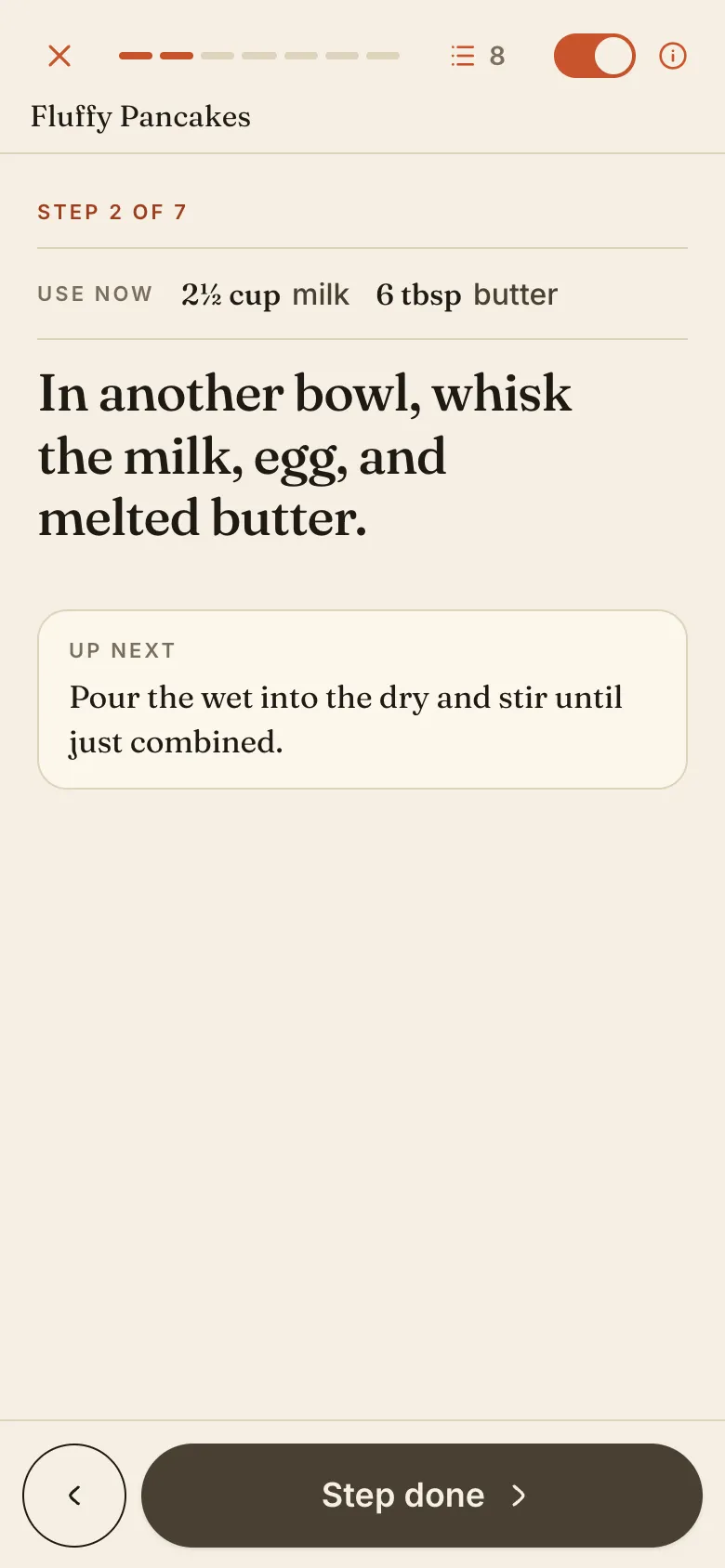
Step it up to eight and every line doubles: 3 cups of flour, 2½ cups of milk, 2 eggs, 6 tbsp of butter.
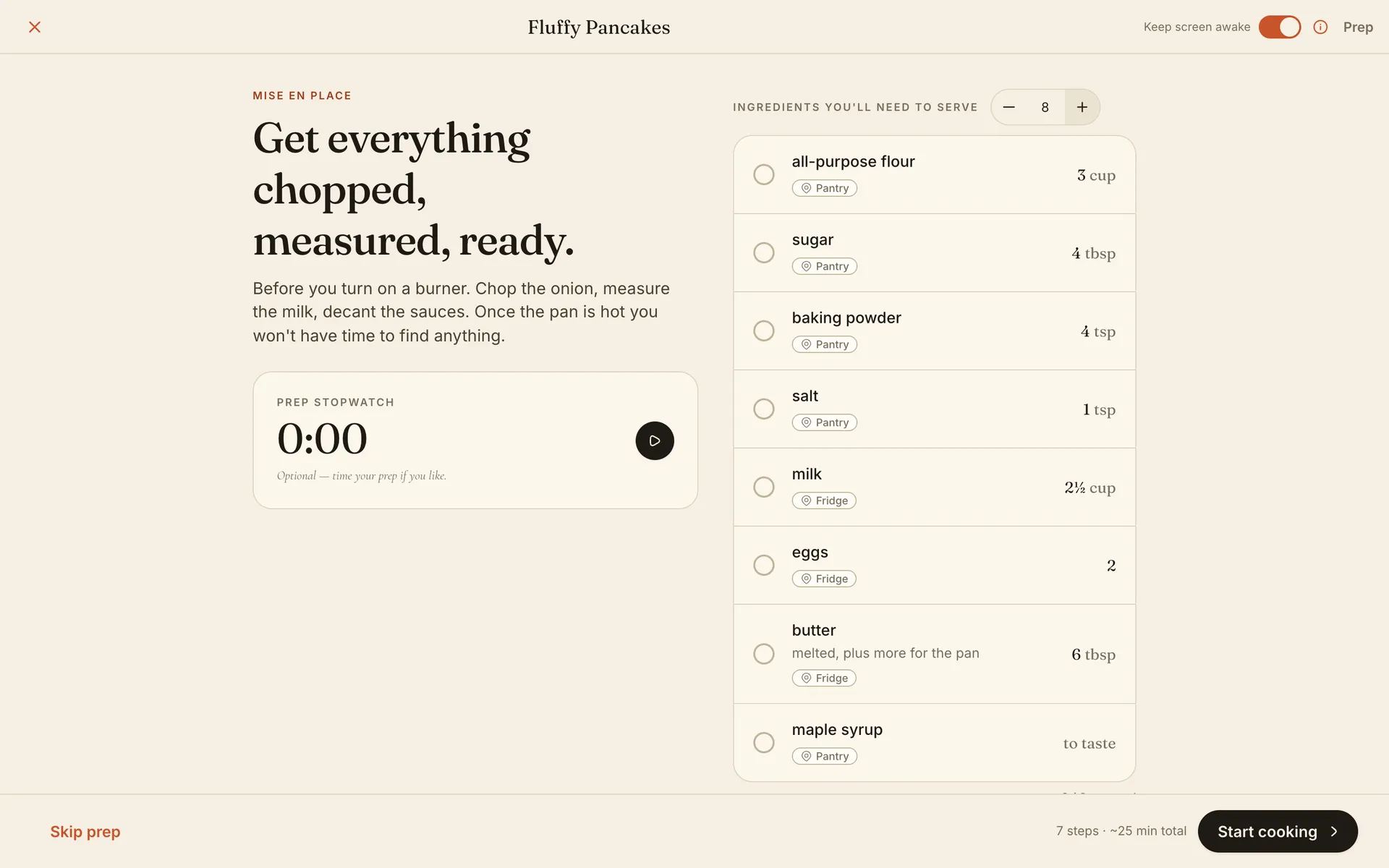
Look at the salt. The stepper doubled it to a full teaspoon, because that’s what multiplying does. Whether all of it goes in is the 75% judgement from earlier, and that one’s yours.
Once you start cooking, each step shows a Use now strip of the ingredients it names, at the scaled amount. This is the screen that sits on the counter.
What the stepper does not do
The stepper rescales ingredient quantities. That’s all it does.
- It doesn’t re-time anything. The prep and cook times stay as written whether you’re feeding two or 12.
- It doesn’t resize the pan. If the recipe says a loaf pan and you’ve tripled it, you need three loaf pans or a new plan.
- It doesn’t rewrite the instructions. “Make six hollows in the sauce” still says six.
- It doesn’t save. Stepping the servings changes what you see for this cook; the recipe stays at its original servings for next time.
Salt, leavening, pans, and timing are still your calls. The stepper does the multiplying, which you’d otherwise do with floury hands.
Free and paid
The servings stepper on the recipe page is on the free plan. Cook mode, including its stepper and the Use now strip, is a paid feature. Every new account gets a 30-day trial with cook mode switched on, no credit card needed, then drops to free unless you upgrade. The details are on the pricing page.
Scale it once, by hand
Next time a recipe doesn’t match your table, do the division, multiply, and then go down the list of salt, leavening, eggs, pan, and time. It takes two minutes. When you’d rather the arithmetic happened on its own, keep your recipes in one cookbook and tap the stepper instead.
Frequently asked questions
How do you scale a recipe?
Divide the servings you want by the servings the recipe makes. That number is the conversion factor. Multiply every ingredient by it, then adjust the few things that do not scale in a straight line: salt and strong spices, eggs, pan size, and cooking time.
How do you scale down a recipe that calls for one egg?
Beat the egg and measure out what you need. A large egg is about 3 tablespoons, or roughly 50 grams, once it is out of the shell, so half an egg is about 1½ tablespoons. Keep the rest for scrambled eggs or an egg wash.
Does the Pantry Pal servings stepper change cooking times or pan size?
No. It rescales ingredient quantities and nothing else. The prep and cook times stay as written, and so does every instruction, including the pan. Those are still your call.