From the blog
How to substitute an ingredient: a chart of 18 swaps and when they fail
Need to substitute an ingredient tonight? A chart of 18 common swaps with ratios and catches, plus which swaps need starting the night before.
You’re halfway into a recipe and the one thing it needs isn’t there. No buttermilk, no brown sugar, one egg short. Before you put your coat on, check whether you can substitute an ingredient you already have. Usually you can, as long as you know the ratio and the one thing the swap can’t do.
Below is the chart I keep coming back to, then a short note on how Pantry Pal handles the swaps it’s sure about.
The rule behind every ingredient substitution
Most ingredients do one job: acid, fat, sweetness, binding, lift. Swap one acid for another and you’ll be fine. Things go wrong when the missing ingredient does two jobs and the stand-in only does one. Butter is fat, and in a cookie it’s also the air you beat into it. Oil covers the fat but not the air, which is why oil cookies come out flat.
So before you swap, ask what the ingredient is doing in this recipe. If it’s one job, the chart will see you through. If it’s two, read the catch column first.
Ingredient substitutions chart
| Missing | Use instead | Ratio | The catch |
|---|---|---|---|
| Buttermilk | Milk + lemon juice or white vinegar | 1 cup milk + 1 tbsp acid, rest 5 min | Thinner than the real thing. Fine for pancakes and quick breads, weak in a creamy dressing |
| Sour cream | Plain Greek yogurt | 1:1 | Tangier, and it can split in a hot sauce. Stir it in off the heat |
| Egg (baking) | Ground flax + water | 1 tbsp flax + 3 tbsp water per egg, rest 5 min | Binds but doesn’t lift. Good in muffins and cookies, not in anything that relies on whipped eggs |
| Egg (baking) | Unsweetened applesauce | ¼ cup per egg | Makes a denser, moister crumb. Sweet bakes only, and no more than 2 eggs’ worth |
| Butter (baking) | Neutral oil | ¾ cup oil per 1 cup butter | Works in muffins and loaf cakes. Fails in creamed cookies, pastry, and icing |
| Salted butter | Unsalted butter + salt | Add ¼ tsp salt per ½ cup | Or the other way round: cut the recipe’s salt by the same amount |
| Fresh herbs | Dried herbs | 1 tbsp fresh = 1 tsp dried | Add dried herbs early so they soften. No good as a garnish |
| Brown sugar | White sugar + molasses | 1 cup sugar + 1 tbsp molasses (2 tbsp for dark) | Skip the molasses and cookies spread thinner and crisper |
| Sugar | Honey | ¾ cup honey per 1 cup sugar | Cut other liquid by ¼ cup and the oven by 15°C (25°F). It browns faster |
| Cornstarch | All-purpose flour | 2 tbsp flour per 1 tbsp cornstarch | The sauce turns cloudy, not glossy. Simmer 2–3 min to cook out the raw taste |
| Self-raising flour | All-purpose flour + baking powder + salt | 1 cup flour + 1½ tsp powder + ¼ tsp salt | Whisk it well or you’ll get bitter pockets |
| Baking powder | Baking soda + cream of tartar | ¼ tsp soda + ½ tsp cream of tartar per 1 tsp | Starts working the moment it’s wet. Get it in the oven quickly |
| Heavy cream (cooking) | Milk + melted butter | ¾ cup milk + ¼ cup butter | Fine in a sauce or soup. It won’t whip |
| Milk | Evaporated milk + water | ½ cup + ½ cup | Slightly sweeter and richer. Nobody will notice in a bake |
| Wine (pan sauce) | Stock + a little vinegar or lemon | ½ cup stock + 1 tsp acid | Loses some depth. Don’t try it where wine is the main liquid, like coq au vin |
| Lemon juice | Lime juice | 1:1 | More floral and a bit bitter. Wrong where lemon is the point, like lemon curd |
| Canned beans | Dried beans | 1 cup dried ≈ 2 cans | Soak overnight, then simmer about an hour. Boil kidney beans hard for 10 min first |
| Dried beans | Canned beans | 2 cans ≈ 1 cup dried | Drain, rinse, and skip the soak. The quickest swap on this chart |
Two things the chart can’t show. First, swaps add up: one swap in a recipe is almost always fine, but by the third you’re cooking a different dish. Second, only one row has to start a day early, the dried beans. Every other swap happens at the counter. If you want dried chickpeas for Friday’s hummus, you have to remember on Thursday night, and Thursday night is when you’ve forgotten about the hummus.
Where Pantry Pal fits
The chart is for your head. Pantry Pal takes a narrower job: it applies the swaps it’s sure about to the food you actually have, and it tells you when one needs starting tonight.
I’ll be clear about the size of that list, because it’s small. The swaps are curated by hand rather than generated, and the list grows only when I’m sure a new one holds up. Pantry Pal won’t guess at swaps it isn’t sure about, because a wrong swap gives you a flat cake, and that’s worse than no swap at all.
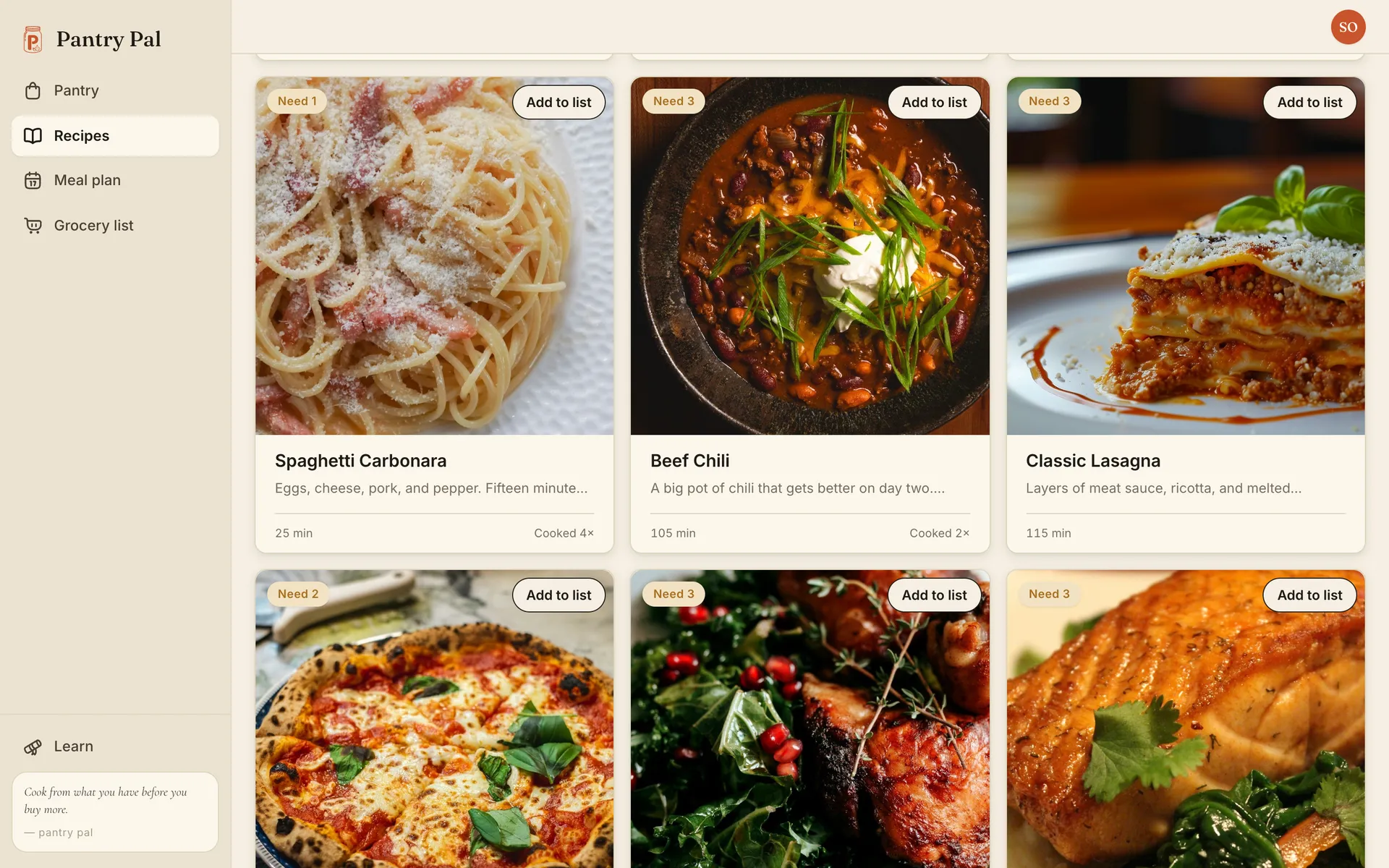
Here’s what it does with the ones it has. Your recipes sit against your pantry, and each card says how close you are. When a swap is part of that count, the card says so.
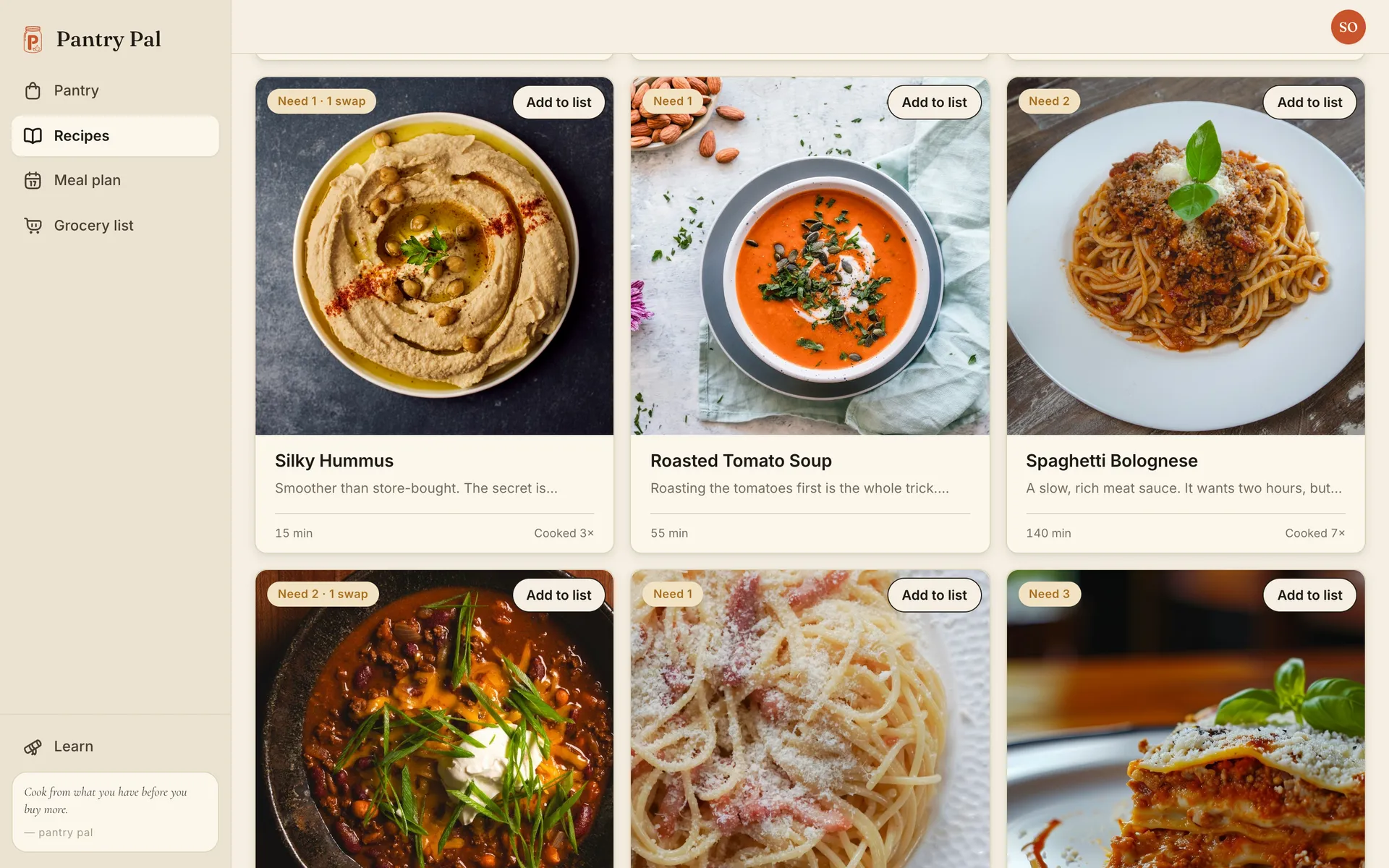
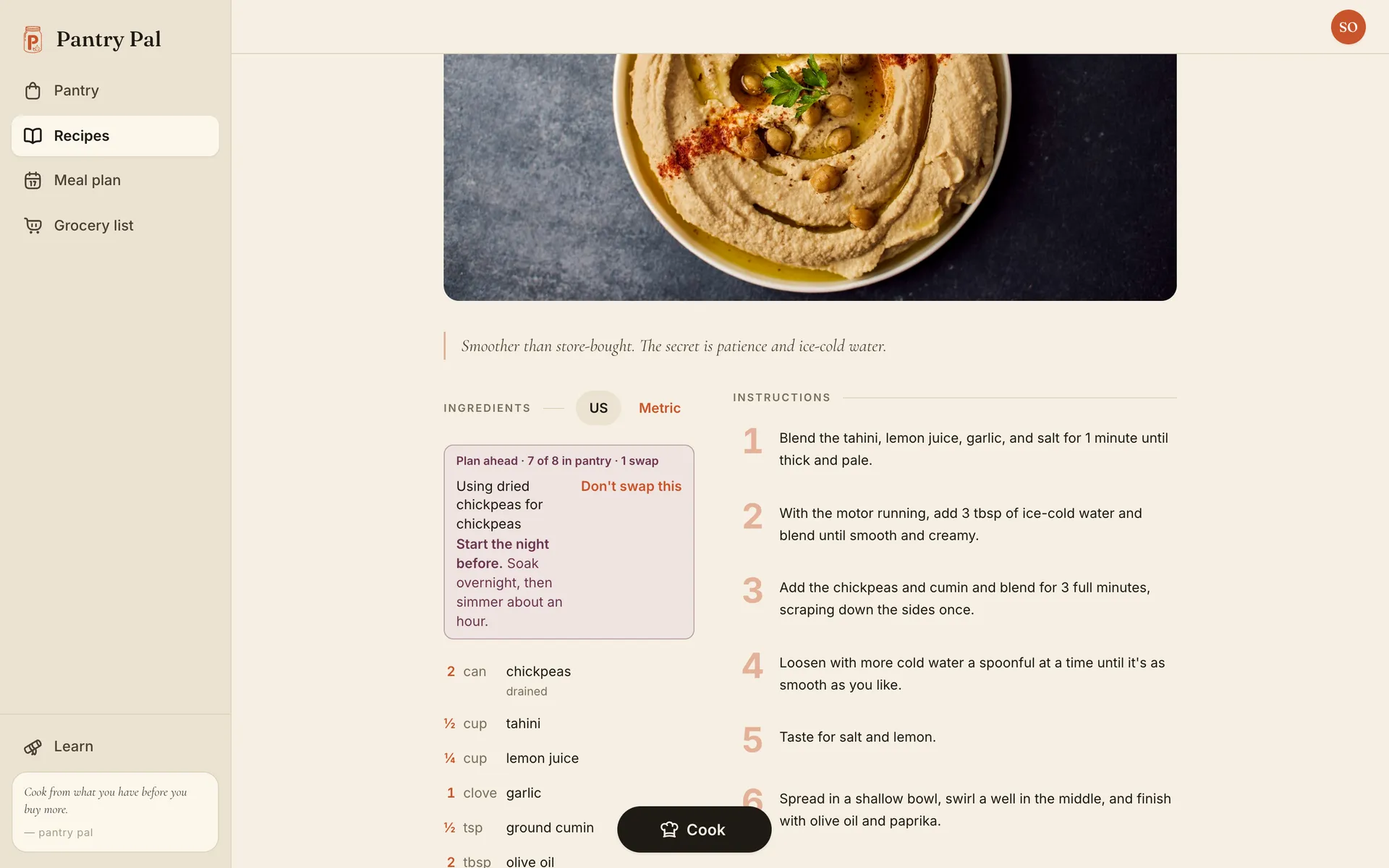
Open the recipe and the swap gets its own block above the ingredients. It names which ingredient stands in for which and how much time the swap adds.
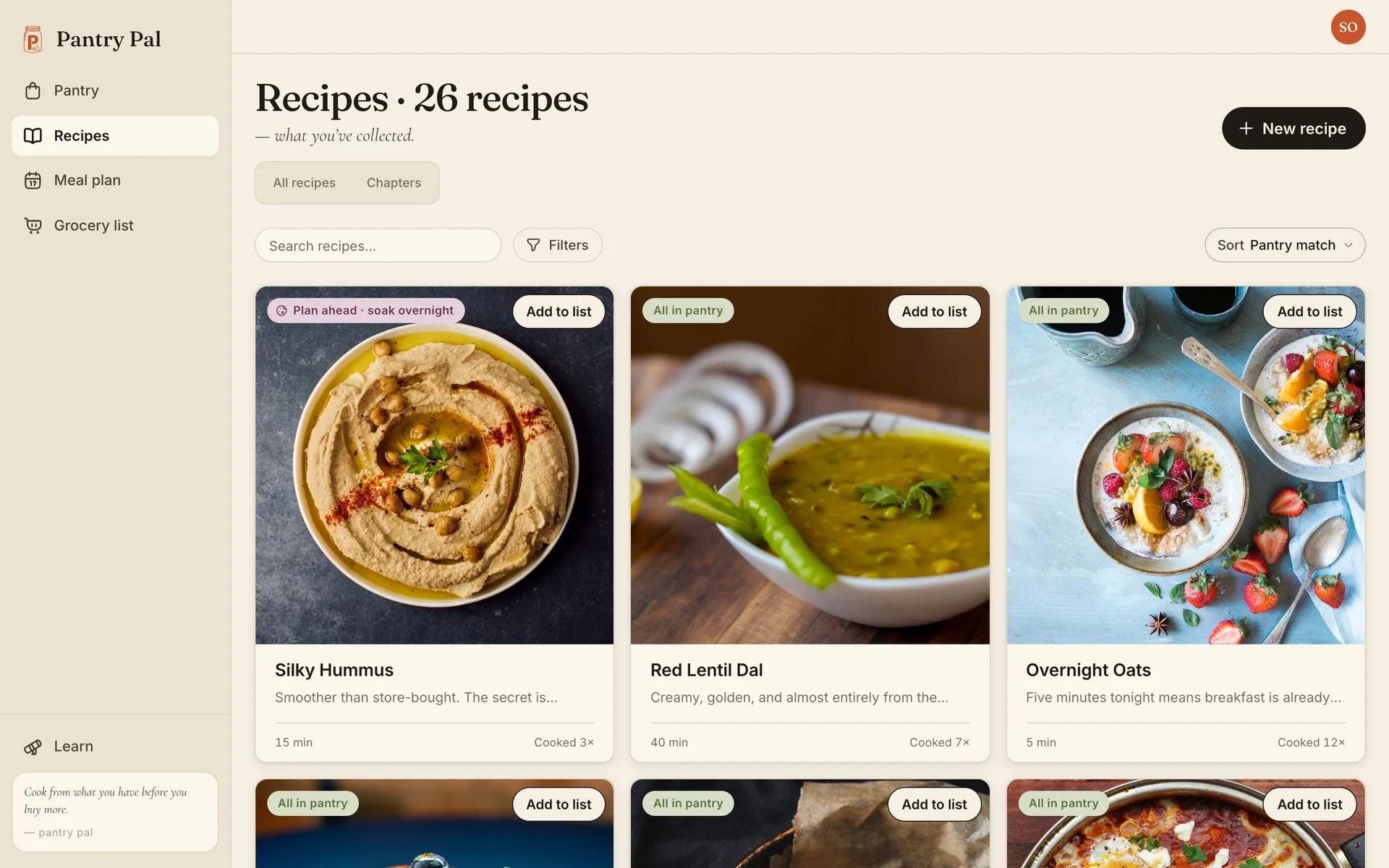
Once the last missing thing is in the pantry (here I added lemon juice), the card doesn’t say “All in pantry”, because that would be a lie at 6pm. It says Plan ahead · soak overnight.
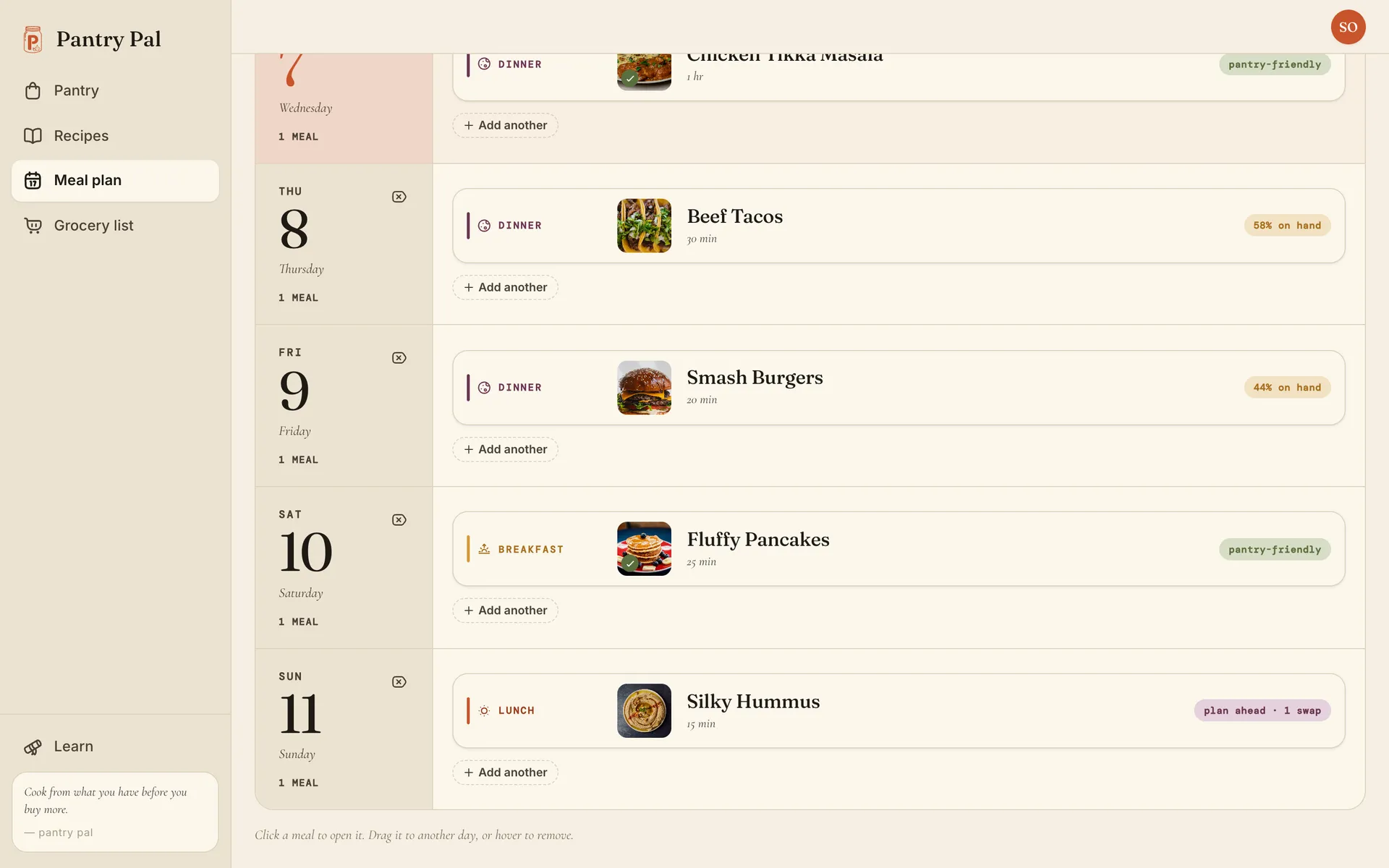
The meal plan uses the same reading. Plan the hummus for Sunday lunch and the entry reads plan ahead · 1 swap instead of pantry-friendly, so you see it on Saturday while there’s still time to soak.
When you don’t want the swap
Maybe you’d rather buy the canned kidney beans than boil dried ones hard for 10 minutes. Every swap row has Don’t swap this. It asks once, and it’s upfront that the choice covers your whole household.
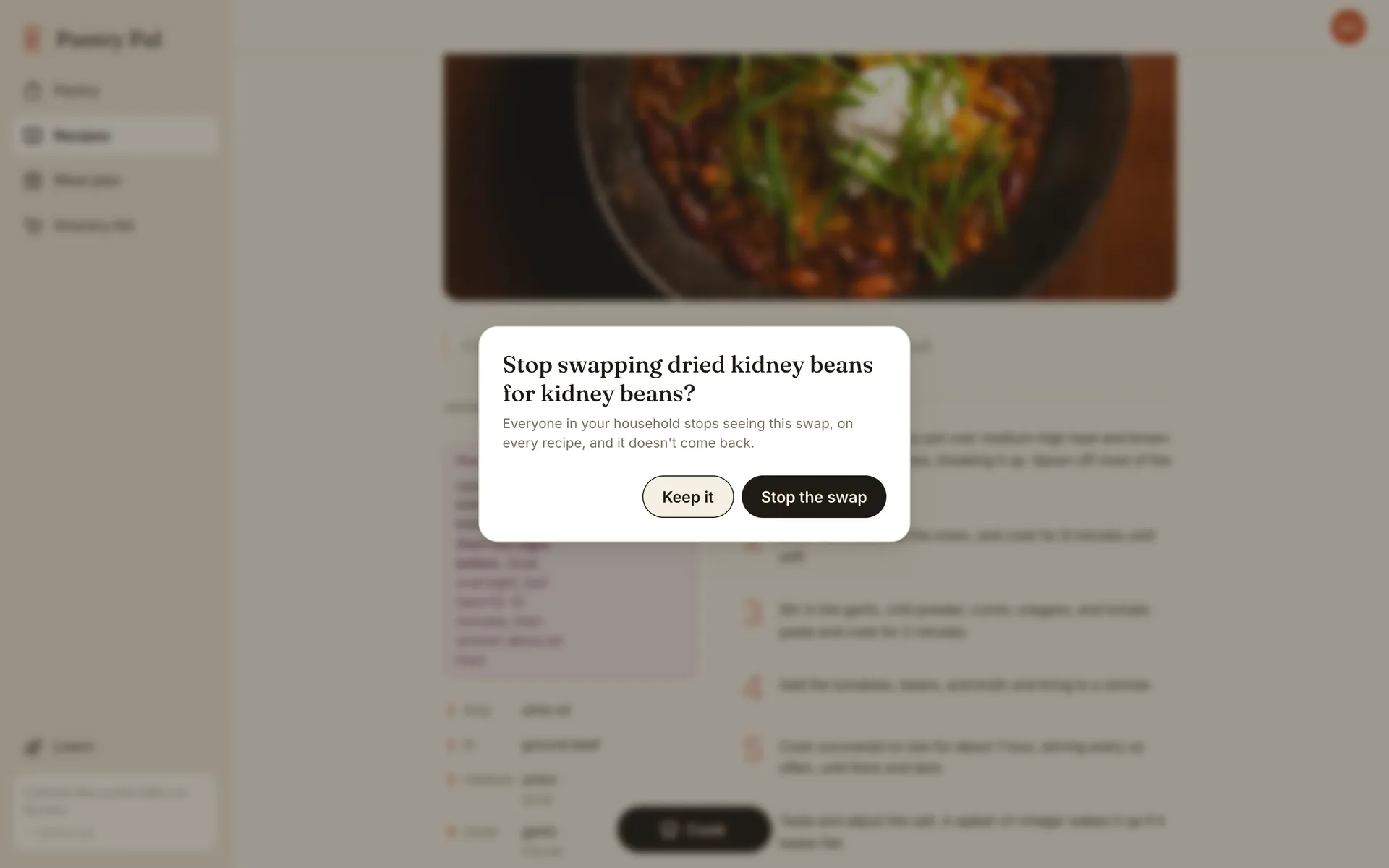
Stop the swap and the chili goes back to counting kidney beans as missing. Its card goes from Need 2 · 1 swap to Need 3, which is the honest number if you’re not going to soak anything.
Swaps on your recipes, the plan-ahead badge, and Don’t swap this are all on the free plan. The meal plan is Pro, and it’s part of the 30-day trial every new account starts with. The details are on the pricing page.
The short version
Keep the chart somewhere you’ll find it. Ask what the missing ingredient is doing before you swap it. Watch out for the rows that need a day’s notice. If you’d rather your recipe list did that last part, Pantry Pal ranks your recipes against what you have and flags the swaps that need starting the night before.
Common questions
What is the most reliable way to substitute an ingredient? Swap like for like: an acid for an acid, a fat for a fat, a binder for a binder, at the ratio in the chart. Most failed substitutions come from swapping an ingredient that does two jobs (butter is fat and structure) for one that does only one of them.
Can I use dried beans instead of canned? Yes. One cup of dried beans gives about the same as two cans, but they need soaking overnight and an hour or so of simmering. Kidney beans also need a hard 10-minute boil. That is a swap you have to start the night before, not at 6pm.
Does Pantry Pal know every substitution? No. It knows a small list of swaps, curated by hand rather than generated, and the list grows over time. It will not guess at a swap it is not sure about. When a recipe uses one, it says so on the recipe, on your recipe list, and on the meal plan, and tells you when the swap needs starting the night before.